The planning takeaway
There is no universal “best” insulation. The right choice depends on how the building will be used, whether it will be conditioned, and the complete wall and roof assembly—not a single R-value number.
Insulation works with the structure, not around it—review the metal building framing components your assembly will attach to.
Planning a heated workspace? See our metal shops for common sizes and layouts.
Insulating a living space? Compare a barndominium vs. a traditional home before you design.
01
What does R-value actually mean?
R-value measures resistance to heat flow. Higher R-values generally provide greater thermal resistance, but overall building performance also depends on air sealing, thermal bridging through the steel framing, installation quality, moisture management, and the entire wall or roof assembly.
Reflective insulation is different from conventional bulk insulation such as fiberglass or spray foam. Its performance depends on the assembly it is installed in and the air spaces adjacent to its reflective surfaces, so a reflective product’s rating cannot be compared directly with a bulk-insulation R-value without knowing the tested assembly.
02
Double bubble. A reflective option.
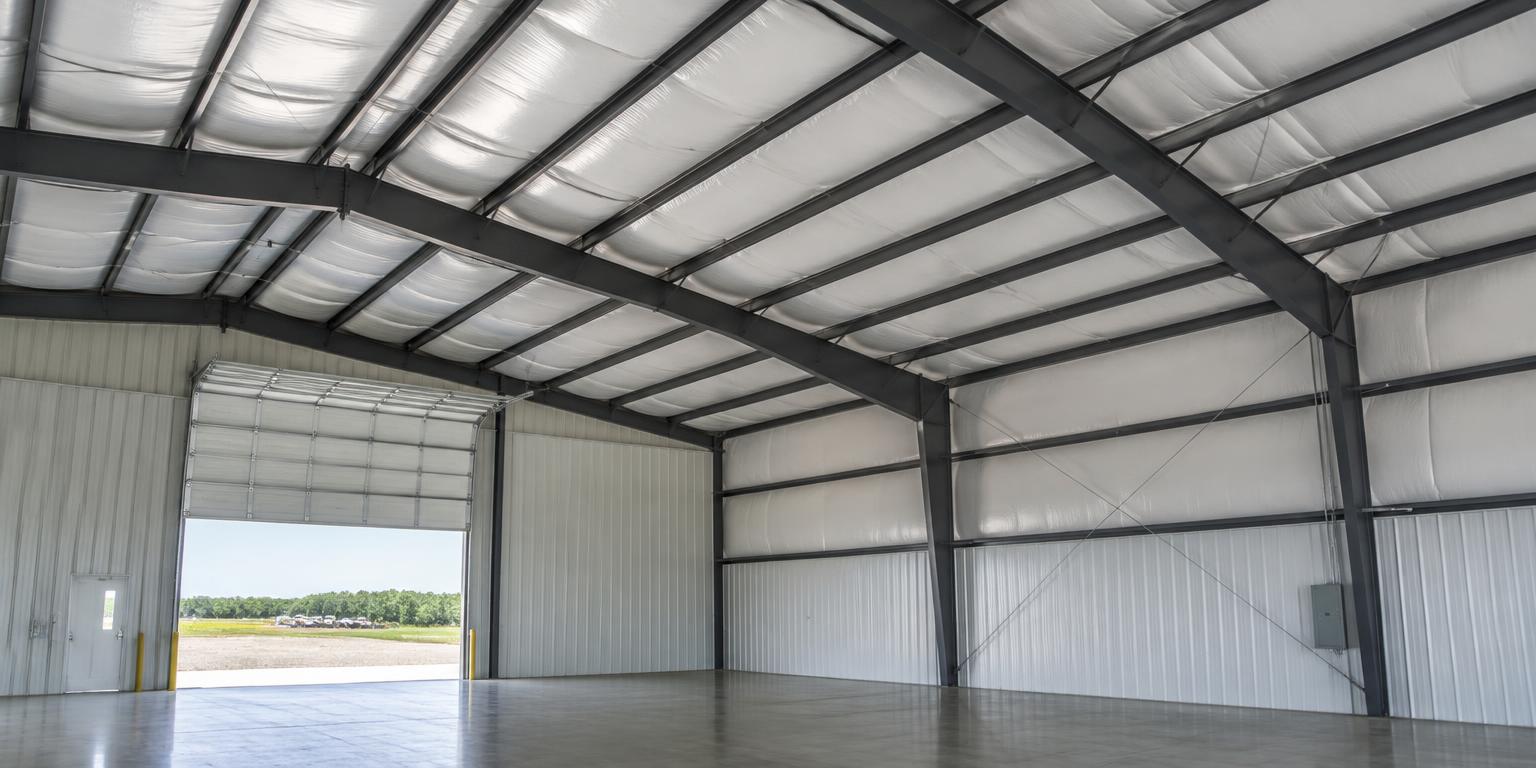
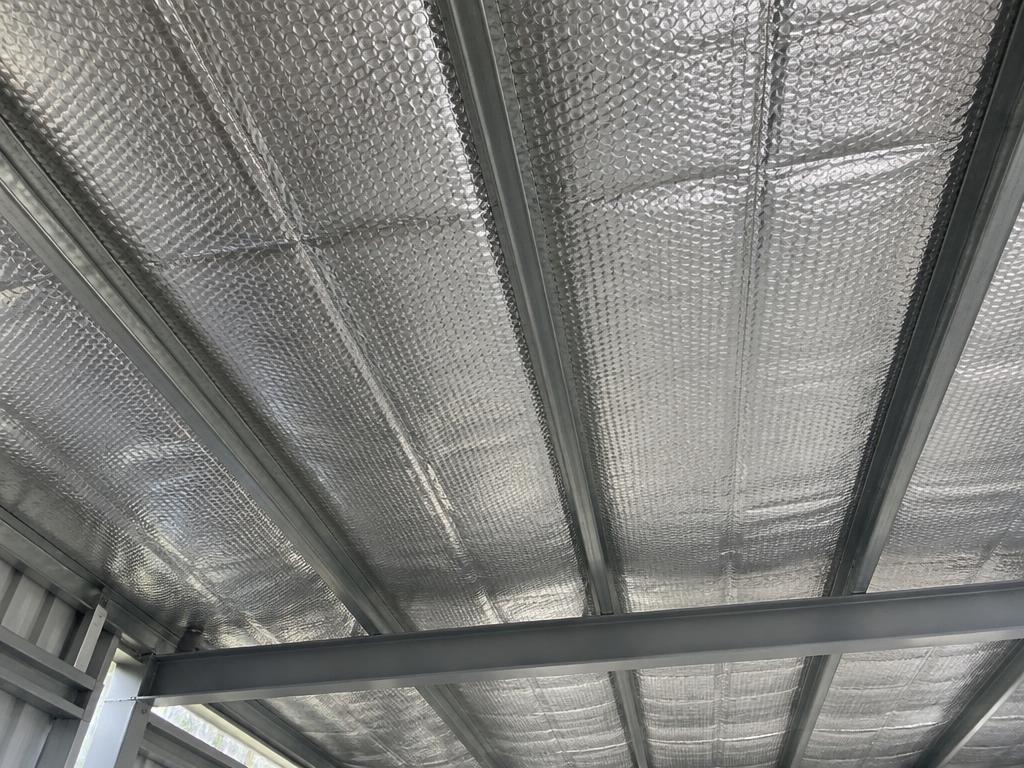
Double-bubble insulation generally consists of layers of polyethylene air bubbles combined with reflective foil surfaces. It is commonly considered for certain metal building roof and wall applications.
Reflective surfaces can reduce radiant heat transfer when installed facing an appropriate air space. The material is lightweight, can be incorporated into certain condensation-control systems, and may be suitable for buildings with limited conditioning needs.
There is no single universal R-value for double-bubble insulation. Performance varies with the manufacturer, the product, its orientation, and the tested installation assembly. Double-bubble insulation alone does not provide the same thermal resistance as thick fiberglass or spray foam.
Common applications include equipment storage buildings, certain agricultural buildings, unconditioned workshops, and projects primarily concerned with radiant heat or condensation management. Suitability always depends on the actual building design.
03
3-inch vinyl-back. Practical thermal insulation.
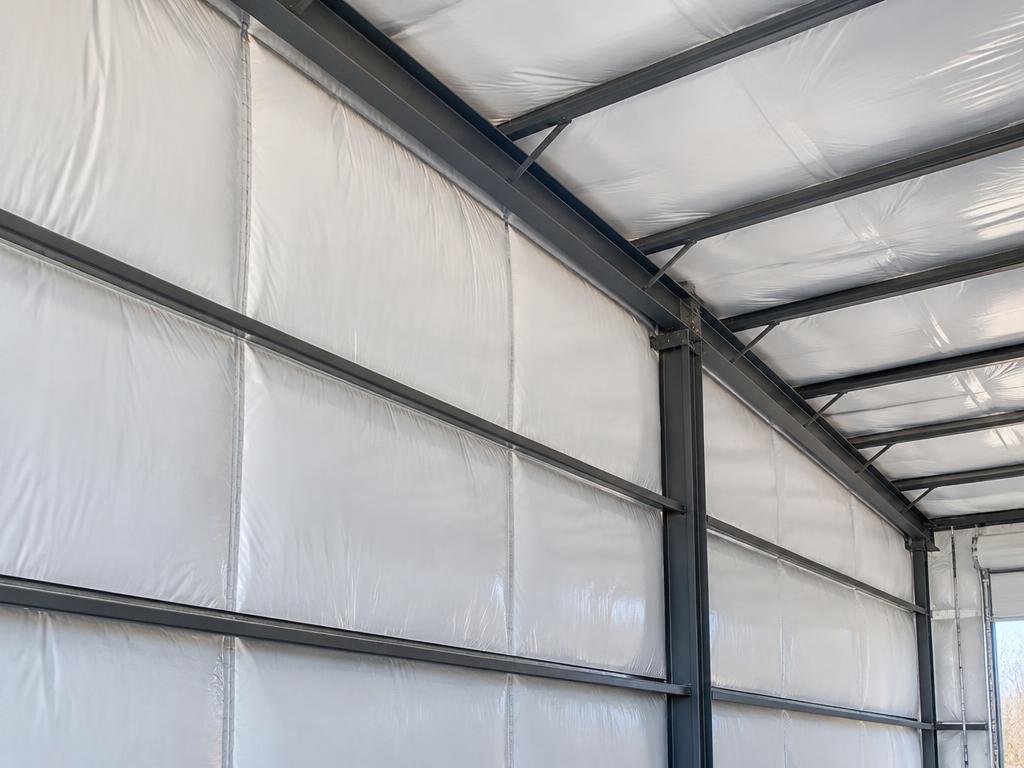
Vinyl-backed insulation generally uses fiberglass blanket insulation with a laminated facing. The fiberglass provides thermal resistance, while the facing can provide a finished interior appearance and serve as part of a vapor-control system when properly specified, sealed, and installed.
A 3-inch vinyl-backed product typically rates around R-9 to R-11, depending on the specific product and installed thickness. Not every 3-inch product is R-11—use the actual manufacturer’s rated R-value once the supplier product is confirmed.
Benefits include conventional thermal resistance, wide use in metal building assemblies, suitability for moderately conditioned spaces, and available interior-facing finishes. Common applications include personal workshops, garages, agricultural buildings, storage facilities, and metal buildings with moderate insulation requirements.
Keep in mind that compression of the fiberglass and thermal bridging through the steel framing can reduce the performance of the completed assembly below the product’s nominal rating.
04
Spray foam. Insulation and air sealing.
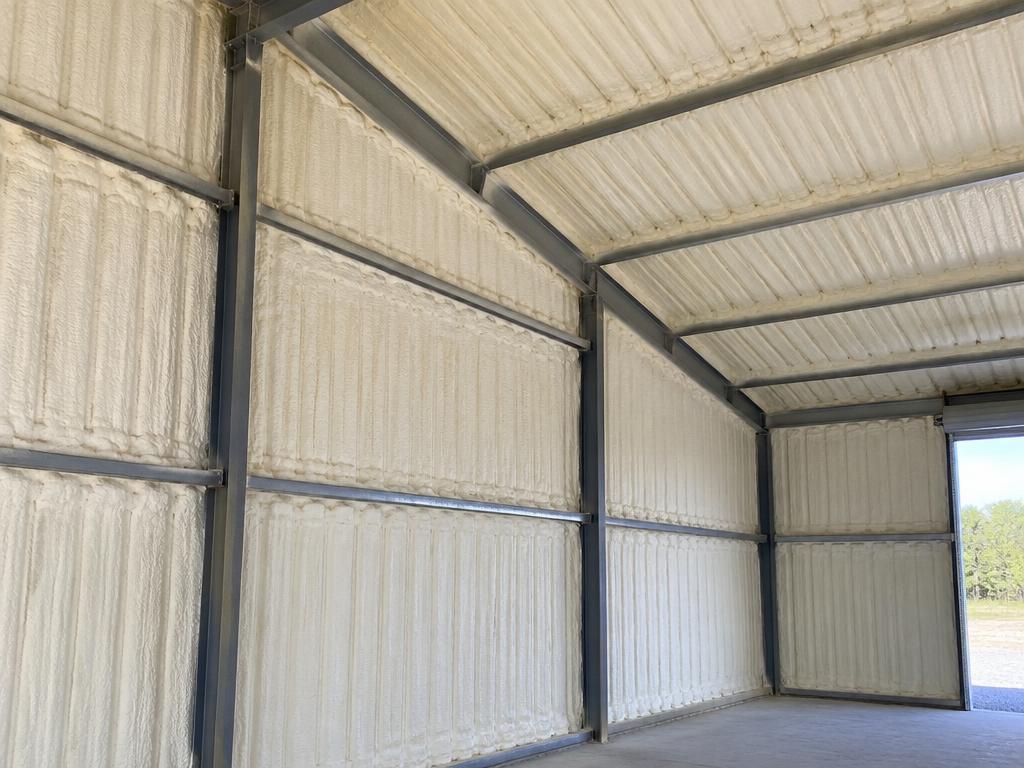
Spray polyurethane foam is applied to surfaces and expands to create an insulating layer. It comes in two common forms with different properties.
Common applications include conditioned workshops, heated and cooled metal buildings, certain commercial buildings, residential metal building assemblies, and barndominiums—subject to applicable energy codes and approved assembly designs.
Spray foam may require ignition or thermal barriers, professional installation, ventilation, and code-compliant detailing. Exposed spray foam is not automatically acceptable in occupied spaces.
Open-Cell Spray Foam
Typically around R-3.6 to R-4.5 per inch. A softer, lower-density material that can provide effective air sealing at specified thicknesses. It is vapor-permeable and requires careful moisture design.
Closed-Cell Spray Foam
Typically around R-5.8 to R-6.9 per inch. A denser, rigid material with higher thermal resistance per inch. It can provide air sealing and vapor resistance at appropriate thicknesses and is often considered where space or moisture-control requirements favor closed-cell products.
05
Which insulation is right for your build?
Each option solves a different problem. This comparison is a starting point for a conversation about your building—not a verdict. There is no universal winner, and installed cost depends on the project, so we compare characteristics rather than prices.
| Double-Bubble Reflective | 3" Vinyl-Backed Fiberglass | Spray Foam | |
|---|---|---|---|
| Typical R-value | Varies by product, orientation, and tested assembly | Approx. R-9 to R-11 (product-specific) | Open-cell ≈ R-3.6–4.5/in · Closed-cell ≈ R-5.8–6.9/in |
| Thermal resistance | Low on its own; relies on adjacent air spaces | Moderate conventional resistance | Highest per inch of the three |
| Radiant heat control | Strong when facing an appropriate air space | Limited | Limited |
| Air sealing | Minimal | Minimal | Strong at specified thicknesses |
| Condensation considerations | Can be part of a condensation-control system | Facing can serve as part of a vapor-control system when sealed | Closed-cell can add vapor resistance at appropriate thicknesses |
| Typical applications | Equipment storage, agricultural, unconditioned shops | Workshops, garages, storage, moderate conditioning | Conditioned shops, commercial, barndominiums |
| Installation requirements | Installed with correct orientation and air spaces | Fitted between framing; avoid compression | Professional application; may require thermal/ignition barriers |
| Relative complexity | Low | Moderate | Highest |
06
Built for Oklahoma weather.
Oklahoma buildings see hot summers, cold winter periods, and wide temperature swings—sometimes within the same week. Humidity adds another challenge: warm, moist air meeting a cooler metal surface produces condensation, which is why condensation on metal panels is such a common complaint in unconditioned buildings.
Air sealing and ventilation matter as much as the insulation material itself. The right selection depends on whether the building will be conditioned, how it will be used, and the applicable building and energy code requirements for your project.
Questions to ask your builder
- Will my building be conditioned now or in the future?
- Which insulation assembly is being quoted, and what is its manufacturer-rated R-value?
- How does the proposal handle condensation, vapor control, and ventilation?
- Are thermal or ignition barriers required for my intended use?
Technical reference & important limits
R-value ranges reflect commonly published manufacturer and building-science references for these product categories. Actual performance depends on the specific product, the tested assembly, and installation quality. Insulation performance and code compliance depend on the complete assembly, materials, and installation.
This guide is for planning and education, not installation instructions or engineered drawings. Structural design, foundations, connections, spacing, loads, and code compliance require project-specific plans and qualified professional guidance.